
 Animals may be transported on AMHS vessels, but are restricted to the
car deck. They must be properly contained in an approved carrier or be
transported in a vehicle and accompanied by an adult passenger. Animals
are transported at the owner's risk and all state of Alaska regulations
must be met prior to animals entering the state. If you have additional
questions on transporting an animal, contact our reservations call
center at 1-800-642-0066.
Animals may be transported on AMHS vessels, but are restricted to the
car deck. They must be properly contained in an approved carrier or be
transported in a vehicle and accompanied by an adult passenger. Animals
are transported at the owner's risk and all state of Alaska regulations
must be met prior to animals entering the state. If you have additional
questions on transporting an animal, contact our reservations call
center at 1-800-642-0066.
Pets are restricted to the car deck and must be contained in an approved
travel carrier (hardside or clamshell style with appropriate room to
move is recommended) or be transported in a vehicle and accompanied by
an adult passenger. U.S. Coast Guard regulations restrict passenger
access to the car deck while the vessel is underway. On extended
sailings such as between Bellingham and Ketchikan, Juneau and Whittier,
and in route to Sitka, 15-minute pet calls will be made approximately
every 8 hours to allow pet owners to be escorted to the car deck. Owners
are responsible for attending and cleaning up after pets. Pet calls are
made at the discretion of the Captain and may occur throughout the day
or night. Owners may also attend to pets any time the vessel is stopped
in port. Household pets other than dogs and cats may be subject to
additional rules and restrictions, please call for more information.
Pet owners should take into consideration the car deck environment
on board the ferry before confirming travel with a pet. Vehicles are
parked closely together which may make it difficult for large dogs to
exit or enter vehicles. Accessing vehicles with swinging rear doors or
elderly pets that need special accommodation, such as a ramp, may not be
possible. For the safety of our passengers and other pets, please
consider how your pet may react to the stress of an unfamiliar
environment.
|
Traveling with Pets? Here’s the Scoop! To keep all passengers, crew, and pets safe, here is what you need to know about traveling on the Alaska Marine Highway with your dogs. Pets must remain in a vehicle or an approved pet carrier on the car deck. You may disembark and walk your dog while in port. You must be back onboard at least 15 minutes before the ship departs. The purser will give you a return time, when you are disembarking to walk your pet. Car Deck Call Times On longer runs, when the vessel has no port stops during the entire day, there will be designated Car Deck Call times. Because the car deck is closed while the vessel is underway, pet owners are only allowed down during designated Car Deck Calls. • When: These announcements are typically made about every 6 hours (depending on the specific vessel and route layout). • Listen closely: The ship’s crew will announce the exact times over the PA system. Please head to the designated staging area promptly when called! The Golden Rules for a Safe Stroll • Leash Up: All dogs must be on a secure, non-retractable leash at all times. • Stay in Designated Areas: Crew members will guide you. Usually you may walk your dog around the car deck where your dog can relieve themselves. Pets are not allowed in passenger cabins, lounges, or solariums. • Scoop the Poop: You are responsible for cleaning up after your pet. Please bring your own waste bags and dispose of them in the designated trash receptacles. • Watch Your Step: The car deck can be slippery, loud, and crowded with vehicles. Keep your pet close and stay alert. Tip from the Crew: Make sure your pet has plenty of water and a comfortable setup in your vehicle before you head up to the passenger decks! Planning ahead helps ensure a safe and comfortable trip for everyone—two-legged and four-legged alike. Safe travels to you and your furry co-pilots! For more details on our pet policie, ask a crew member at the purser's counter. |
Under Alaska law, a person may not import or transport any animal into the state unless the animal's owner, custodian, or attendant possesses a valid health certificate and permit for the animal. However, in the case of dogs and cats, they need only be accompanied by a health certificate, unless they are imported from a rabies quarantine area, in which case they must be accompanied by a permit as well.
All dogs, cats, and ferrets brought
into Alaska must be accompanied by the following:
> A Certificate of Veterinary Inspection
(CVI), or animal health certificate, issued by a licensed and accredited
veterinarian. CVIs must have a unique certificate number issued by a
government agency or approved vendor to be considered valid. The USDA
APHIS form 7001 available on-line does not have a unique document
number, and is therefore not accepted by the OSV. Your veterinarian is
responsible for ensuring the CVI is compliant. A compliant CVI is valid
for 30 days from the date of inspection. Please plan
accordingly so you are traveling with a valid CVI.
> A current rabies vaccination certificate.
Penalties for
non-compliance may include animal quarantine or prohibited entry of the
animal into the state. A health certificate or permit is not required
when transporting animals between ports within Alaska. For Alaska
regulations regarding importation of animals, please visit PET
IMPORT/EXPORT Bringing Pets To and From Alaska.
When leaving
Alaska, persons transporting animals are responsible for complying with
the regulations of the state or country to which they are traveling. For
information regarding Washington animal importation requirements, visit
the website for the Washington State Department of Agriculture or call
at 360-902-1800. For information regarding Canadian animal importation
requirements, visit the website for the Canadian Food Inspection Agency
or call at 250-363-3618. For travel by road through Canada, passengers
might also wish to check with Canada Border Services Agency for related
information.
Animal transport from U.S. into Canada CLICK HERE
There is no charge on any route for a service animal/service animal in training accompanying a person with a disability. At the time of booking, please notify the reservations agent if you are traveling with a service animal; the reservations agent will notify all AMHS terminal and ship board staff. Service animals are allowed on passenger decks aboard Alaska Marine Highway vessels. Comfort and therapy animals are required to follow the AMHS pet policy and will be restricted to the car deck.
Transport of livestock or other large animals must be pre-approved and may be subject to additional fees and restrictions. See the Acknowledgement of Responsibility form for more information. Please contact our call center at 1-800-642-0066 for details.
 If
you will be entering Canada through a border crossing, please be aware
of the following possible animal restrictions.
If
you will be entering Canada through a border crossing, please be aware
of the following possible animal restrictions.
British Columbia, Canada
In the city of Vancouver, British Columbia, Canada, Staffordshire Bull
Terriers, American Staffordshire Terriers, and American Pit Bull
Terriers are automatically considered vicious. In addition, any dog that
attacks a person or animal without provocation is considered vicious or
aggressive in Vancouver.
As of January 1, 2023, the City of Vancouver requires that dog owners
apply for and obtain an aggressive dog license if their dog is deemed
aggressive by the Provincial Court of BC. Similar regulations are in
place in the cities of Surrey, Nanaimo, Maple Ridge, Fort Nelson,
Elkford, Enderby, Fernie, Nelson, Osoyoos, and Trail.
Northwest Territory, Canada
Numerous communities in Northwest Territory have dog control bylaws. A
dog is deemed "vicious or a public nuisance in Northwest Territory if it
bites a person or domesticated animal in an unprovoked attack. Similar
vicious dog bylaws are in place in the territories of Yukon and Nunavut.
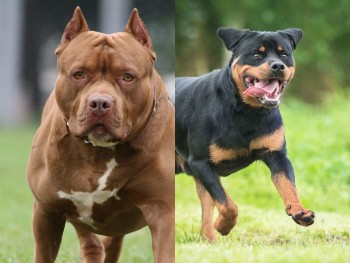
Overall, Pit bulls and Rottweilers are the top dog breeds that are
commonly restricted or banned in Canada.
Updated 06/12/24